Project Overview
Sales Tax Funds for Public Transportation (Durham County Transit Plan)
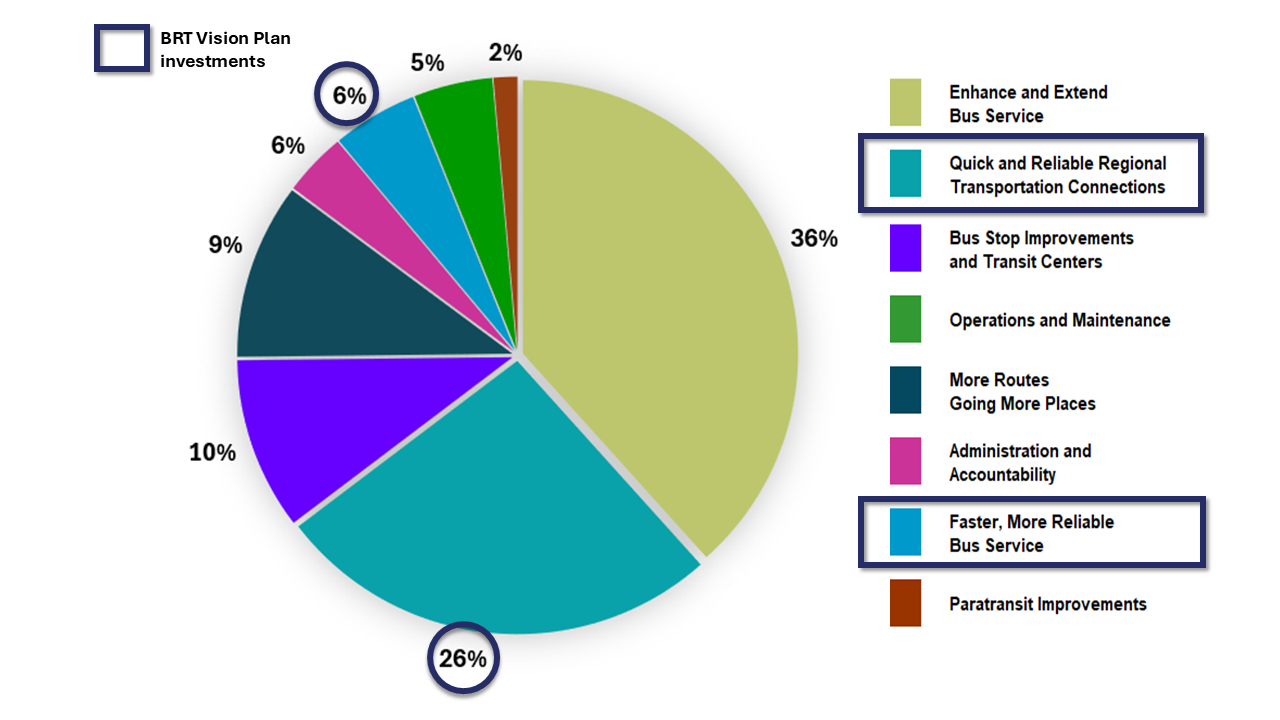
The 2023 Durham County Transit Plan’s budget identified funding for Quick and Reliable Regional Transportation Connections and Faster, More Reliable Bus Service. The Durham County Bus Rapid Transit (BRT) Vision Plan identifies the future of these funds.
The Vision Plan will identify and prioritize corridors for BRT-level service. BRT is a high-quality, bus-based transit service that provides safe, reliable, and frequent transportation. BRT services can feature high-frequency service, dedicated bus lanes, enhanced passenger amenities, and advanced traffic prioritization technology. The Durham BRT Vision Plan will assess strategies for BRT implementation. The plan will also assess where improvements, such as dedicated transit lanes, transit signal prioritization, and stop placement could provide substantial benefits
What is BRT?
Bus Rapid Transit (BRT) is a high-quality, bus-based transit service that is safe, reliable, and frequent.
BRT typically includes:
- High Frequency Service with Fewer Stops – BRT lines operate with frequent bus arrivals, reducing wait times for passengers. By making fewer stops than regular bus routes, BRT speeds up travel and improves overall reliability, making it more convenient for riders who need to get to their destination quickly.
- Enhanced Vehicle and Station Passenger Amenities – BRT vehicles and stations are designed to improve comfort and accessibility. This can include sheltered waiting areas, real-time arrival information displays, benches, lighting, and level boarding that makes it easier for all riders to use the system. Level boarding also helps to increase the speed of the service by eliminating the need for buses to lower and rise at every stop.
- Traffic Prioritization Technology – BRT systems often use advanced technology, such as transit signal priority, to reduce delays at intersections. This allows buses to move through traffic more efficiently, giving them an advantage over regular vehicles and helps keep service on schedule.
- Some Amount of Dedicated Bus Lanes – Dedicated lanes allow BRT buses to travel separately from other traffic. These lanes help prevent delays caused by congestion and enable consistent, reliable service. In some cases, there may be stretches of road reserved exclusively for buses, especially in busy corridors and during the busiest times of day.
BRT systems may also feature additional elements, such as easy-to-use fare payment systems, security measures, and improved connections to other transit options. Together, these features make BRT an attractive solution for communities seeking faster, safer, and more accessible public transportation.
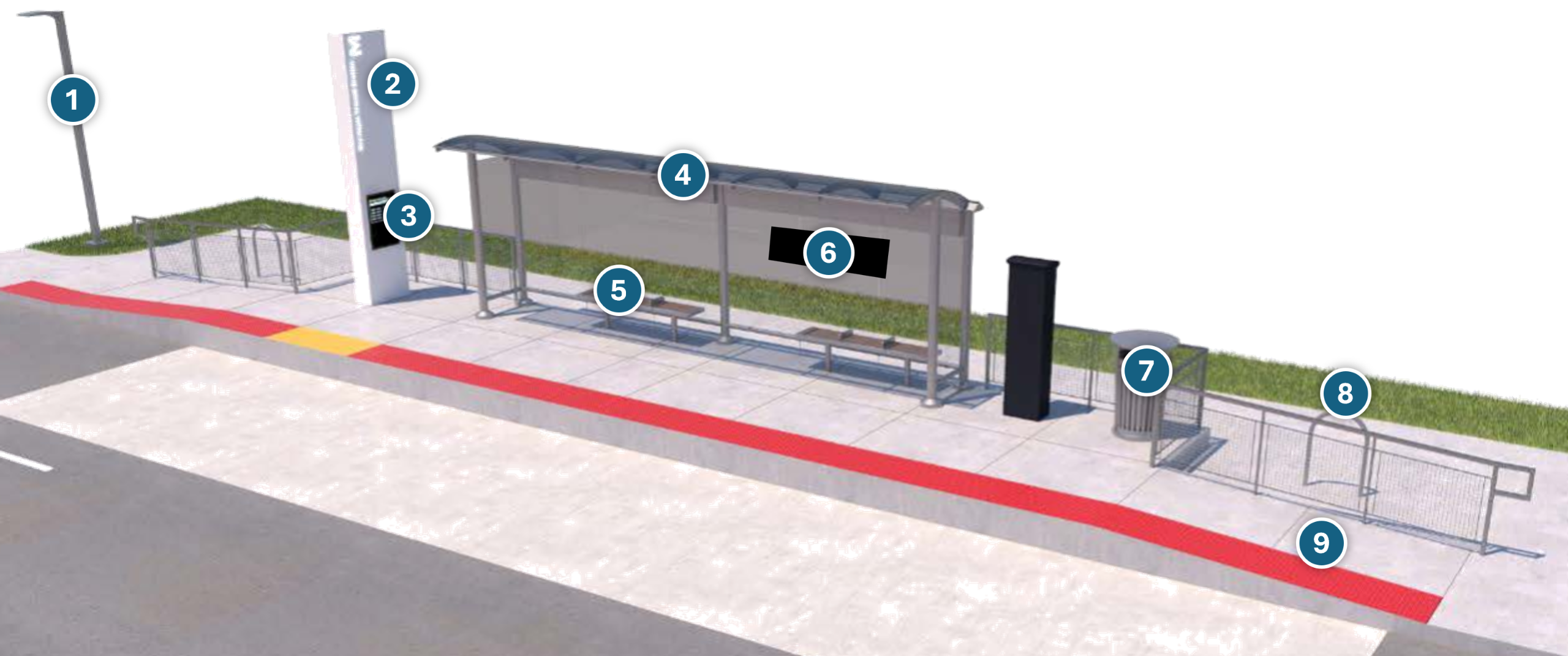
A typical BRT station is shown below. Some amenities that may be included are:
Lighting and security
- Large station sign
- Real-time arrival information
- Bus shelter or other forms of shade
- Bench
- System map
- Trash receptacle
- Bike ramps
- ADA ramps and improved accessibility
Fall 2025 Engagement Summary
In fall 2025, we asked the community to help shape the Durham County BRT Vision Plan by sharing where people travel today and what they want from faster, more reliable transit.
During this phase, we focused on two questions:
- Which bus rapid transit (BRT) corridors could best serve Durham County
- What goals matter most when comparing corridor options (for example: travel time, access, safety, and connectivity)
People shared input in several ways, including pop-up events around the county, three public workshops (two in person and one online), an online survey, and meetings with community groups and stakeholders. These activities gave residents a chance to learn about the project and tell us what’s most important for future BRT service.
Across events, workshops, and the survey, community members highlighted several key themes:
- Speed, Reliability, and Frequency
- People want buses that come often (about every 15 minutes or better), stay on schedule, and help shorten travel times. Many also asked for real-time arrival information.
- Connectivity to Regional Destinations
- Many responses emphasized connecting people to jobs, schools, shopping, and major destinations, both within Durham County and to places like RTP, Raleigh, and Chapel Hill.
- Equity and Access
- Participants asked that improvements reach people who rely on transit the most, and that the system be easy to access for all riders.
- Safety and Rider Experience
- Safety came up often, especially lighting, well-located stops and stations, and safer walking routes to reach transit.
- Incremental Improvements
- Some people asked for improvements that can happen sooner, not only long-term changes. Clear, regular updates about what’s changing, and when, were also important to participants.
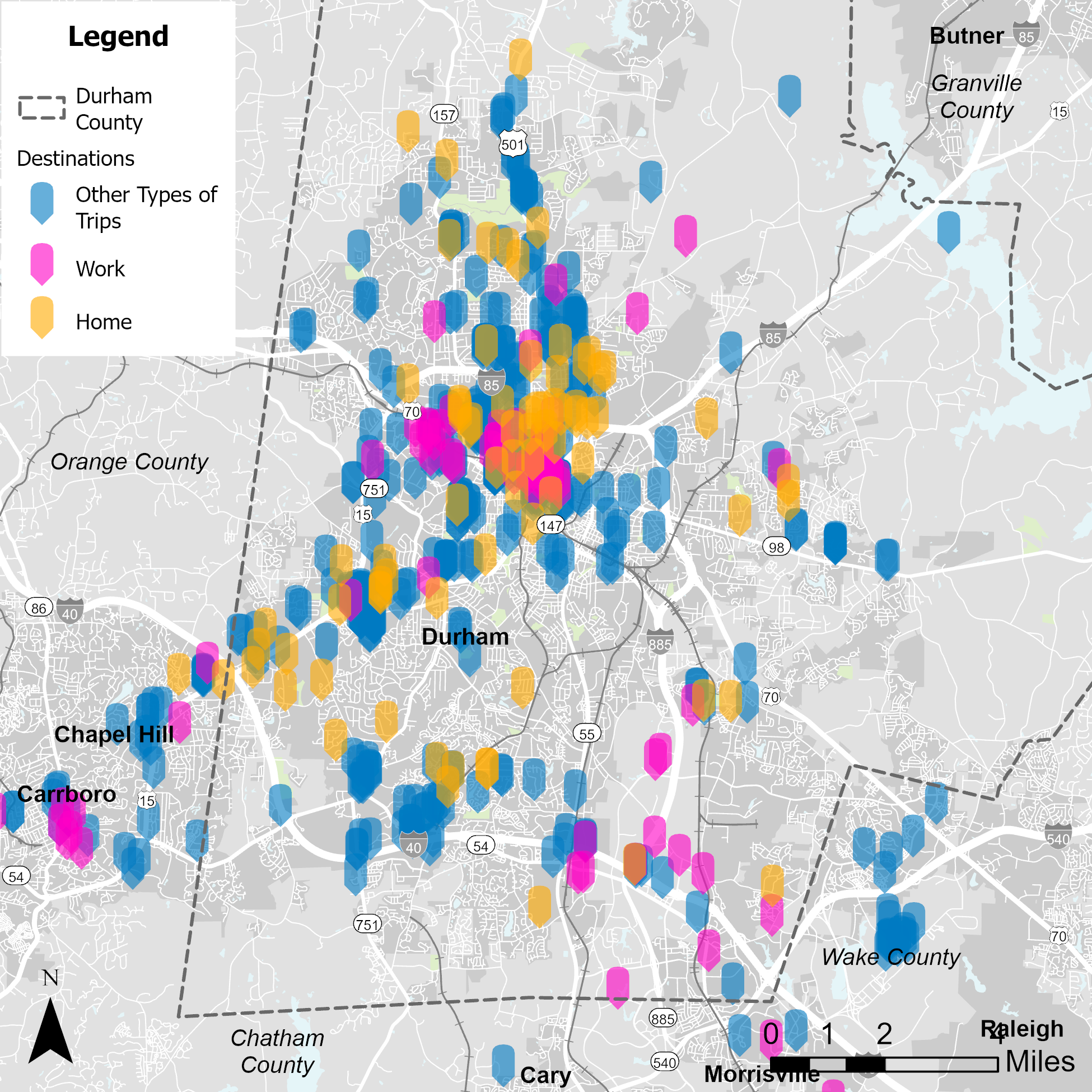
The Fall 2025 survey also included an interactive map. People dropped pins to show places they would travel by transit, marked as “Work,” “Home,” or “Other.” In total, respondents added 613 pins in response to the question: “Where do you go?”
Interactive Map Results: "Where do you go?"
A report detailing the results of the Fall 2025 engagement can be found in the Phase I Public Engagement Report on the project website in the document library.
Fall 2025 Frequently Asked Questions
The questions and answers on this page reflect common themes raised by community members during Phase I of public engagement for the Durham County BRT Vision Plan, conducted between October 7th and December 1st, 2025.
1. How does the Durham County BRT Vision plan relate to the Central Durham BRT project?
The Durham BRT Vision Plan is being developed in coordination with the City of Durham’s Central Durham BRT, a 5-mile corridor already identified for BRT improvements. The BRT corridor will operate between Duke/VA Medical Center to Wellons Village via Durham Station. The Durham BRT Vision Plan will identify and prioritize additional corridors for BRT investment over the next 30 years. For more information about the Central Durham BRT, please visit: https://www.durhamnc.gov/5395/Central-Durham-Bus-Rapid-Transit-Project.
2. How will the BRT Vision Plan approach the use of dedicated bus lanes in Durham County?
Dedicated bus-only lanes are one strategy to make transit faster and more reliable. For example, the Vision Plan is evaluating corridors where traffic congestion currently slows buses down and assessing how much time dedicated bus lanes could potentially save riders.
While dedicated lanes are a great option, they’re just one of several features that can make BRT efficient and attractive to riders. The Vision Plan will identify where dedicated lanes may be most feasible to implement and pair them with other improvements, like enhanced stations, frequent service, and traffic signal priority to create a high-quality experience for riders.
3. Will BRT improvements be introduced in phases so riders can experience benefits sooner?
Yes! The Vision Plan will identify potential phased implementation of BRT treatments for certain corridors so riders can experience improvements and upgrades before a full BRT network is complete. The Plan will also build on existing efforts, like the 2023 Durham County Transit Plan’s recommendation for all-day 15-minute service along select corridors and the Better Bus Project, which has identified opportunities for bus stop improvements, access upgrades, and stop consolidation at key locations.
The Vision Plan will prioritize a phased approach that will help deliver early transit enhancements as the BRT system takes shape.
4. How will the BRT Vision Plan align with future land use decisions to create vibrant, transit-friendly communities?
The Vision Plan is assessing planned future land use to identify corridors best suited for higher-frequency, high-capacity transit to help align transit investments with areas expected to grow and change over the next 30 years. The following plans were reviewed:
- 2023 Durham Comprehensive Plan
- Shaping Our Future: A Transportation and Land Use Initiative (Chapel Hill)
- 2030 Comprehensive Plan Update (Raleigh)
- Morrisville Land Use Plan 2021
- Imagine Cary Comprehensive Plan
5. How will the Durham County BRT Vision align with other regional high-frequency transit planning efforts?
The Vision Plan is designed to complement regional transit efforts by assessing potential connections to Chapel Hill and Raleigh where BRT systems are already in planning or construction, creating a more useful network for riders across the Triangle. For more details on regional projects, visit the Chapel Hill and Raleigh BRT project websites.
6. What future opportunities will the public have to share feedback and help shape the BRT Vision Plan?
Phase two of public engagement will begin in the Spring of 2026 with several ways to participate, including an online survey, public meetings, and pop-up informational sessions at major transit centers and bus stops. Phase two will focus on sharing technical findings, and BRT corridor evaluation results, and gathering input on corridor prioritization to help finalize the Vision Plan and implementation strategies. Meeting materials and translations will be available in the document library on our website. Follow our social media channels for updates and announcements.